
Digital experience
Why Digital Experience Optimisation Should Be On Your 2026 Roadmap

A practical guide for teams who want digital to work harder this year. When journeys are slow, content is unclear and tracking is patchy, even great marketing underperforms. DXO brings UX, content, performance and analytics into one plan - helping you increase conversion, improve lead quality and prove ROI.
It’s that time of year again. A chance to take stock of what worked (and what didn’t), reset priorities, and step into a new year with a clean slate and a long list of good intentions. Against a backdrop of fresh diaries, “back-to-it” inboxes and big ambitions for the months ahead, plans are being dusted off, budgets are being scrutinised and targets set, whilst everyone tries to kick-start momentum fuelled by caffeine, meetings and a slightly heroic belief that this will be the year everything finally clicks.
So before we lose you to the January whirlwind, we want to share one thing that should absolutely be on your 2026 roadmap: getting more value from your digital experience.
We’ve seen the same pattern again and again in 2025: higher expectations, tighter budgets, and more scrutiny on what digital is actually delivering. And for many organisations, the digital experience is under-performing – slow journeys, unclear content, inconsistent execution, scattered data, and decisions based on intuition rather than evidence.
Digital Experience Optimisation (DXO) is simply the discipline of fixing all this.
And it will matter more in 2026 than ever.

1. Why You Should Care About DXO
A poor digital experience doesn’t just frustrate users, it silently erodes revenue every day.
Industry research shows:
- A 1 second delay in mobile load time can reduce conversions by up to 20% (Google UK - Mobile Speed Report).
- Businesses lose up to 35% of potential conversions due to UX friction (Forrester).
- 32% of customers globally would walk away from a brand they love after just one bad digital experience (PwC Future of CX Report).
- Only 43% of leadership teams trust their organisation’s digital analytics (Gartner Marketing Data Survey).
Meanwhile, expectations are rising
AI-powered search, instant comparison, and “I want it now” behaviour mean users expect:
- Clarity
- Speed
- Personalisation
- Seamless journeys
- Consistent messaging
DXO is how organisations meet – and exceed – those expectations.
2. What Investing in DXO Actually Gets You
Here’s what organisations typically gain from DXO:
- Higher conversion with the same traffic
By reducing friction (slower pages, unclear CTAs, brand inconsistencies, confusing content and pathways), teams typically see 10–30% increases in conversion from their existing traffic. This makes DXO one of the highest-ROI digital activities available.
- Lower acquisition costs
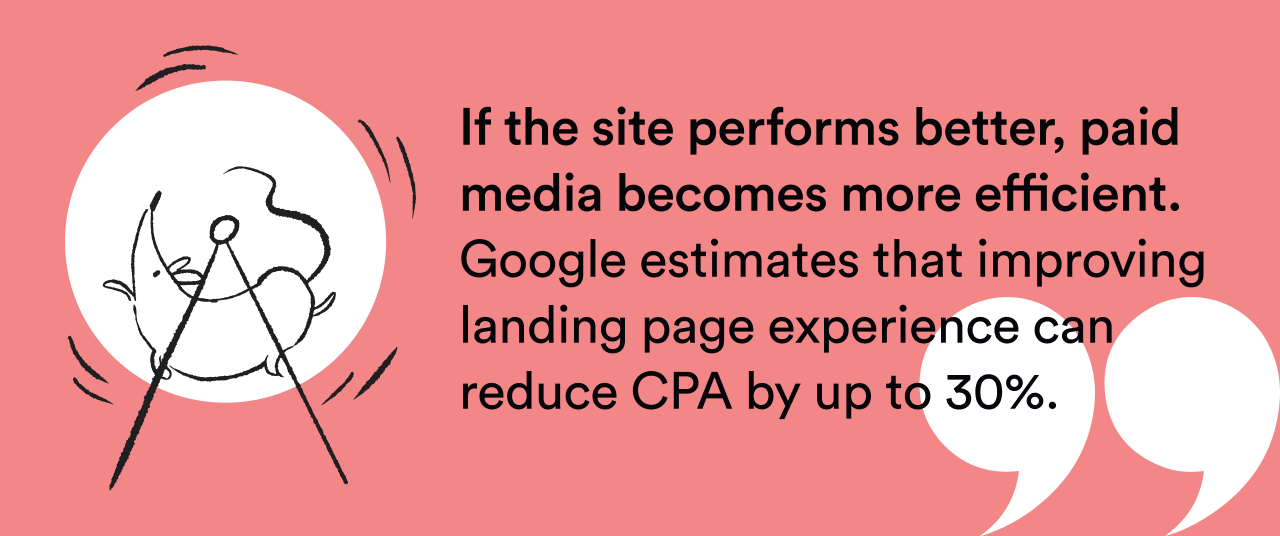
If the site performs better, paid media becomes more efficient. Google estimates that improving landing page experience can reduce CPA by up to 30%.
- Better decisions, less risk
DXO moves teams from opinion → evidence by clarifying:
- What journeys matter most
- What content actually performs
- What’s slowing users down
- What’s wasting team time
- More value from the tech you already have
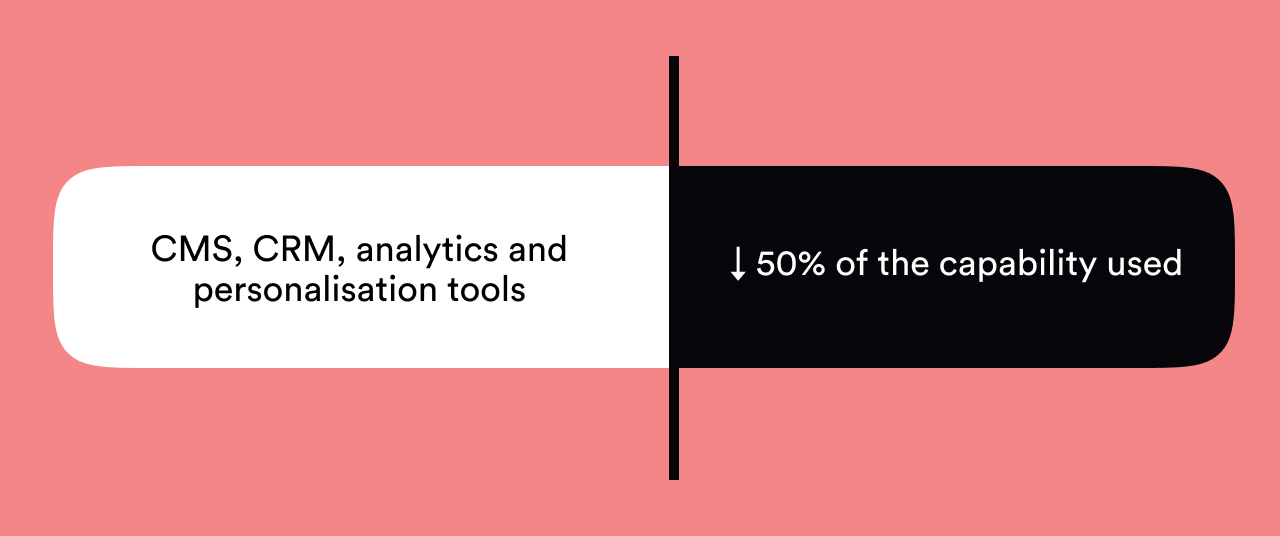
Most teams use <50% of the capability in their CMS, CRM, analytics and personalisation tools. DXO closes that gap before new investment is made.
- A digital estate that scales
Instead of redesigning every 2–3 years, DXO builds continuous improvement into the organisation so when you do invest in new technology, the impact compounds. A much smarter, lighter, more commercially effective way to grow.
DXO doesn’t always replace the need for new platforms, but it does ensure those investments succeed.
3. How to Understand Your Opportunity
Here are three simple diagnostic tools any team can run immediately.
A) The Top-Task Test
Ask: “Can users complete our top three tasks in under 2 minutes?”
If not, you’re losing revenue.
B) The 10-Point Digital Experience Checklist
- Speed
- Navigation
- Mobile optimisation
- Message clarity
- Content quality
- Conversion friction
- Accessibility
- Analytics accuracy
- Brand consistency
- Technical performance
C) The DXO Maturity Scale (1–5)
- Level 1 – Fixing: firefighting, no clarity, inconsistent decisions
- Level 2 – Improving: pockets of progress, but no alignment
- Level 3 – Evolving: UX, content, brand, and tech starting to work together
- Level 4 – Transforming: a coordinated roadmap shaped by evidence
- Level 5 – Optimising: continuous improvement, measurable impact
Most teams are between Level 2 and 3, which means the biggest gains are still ahead.
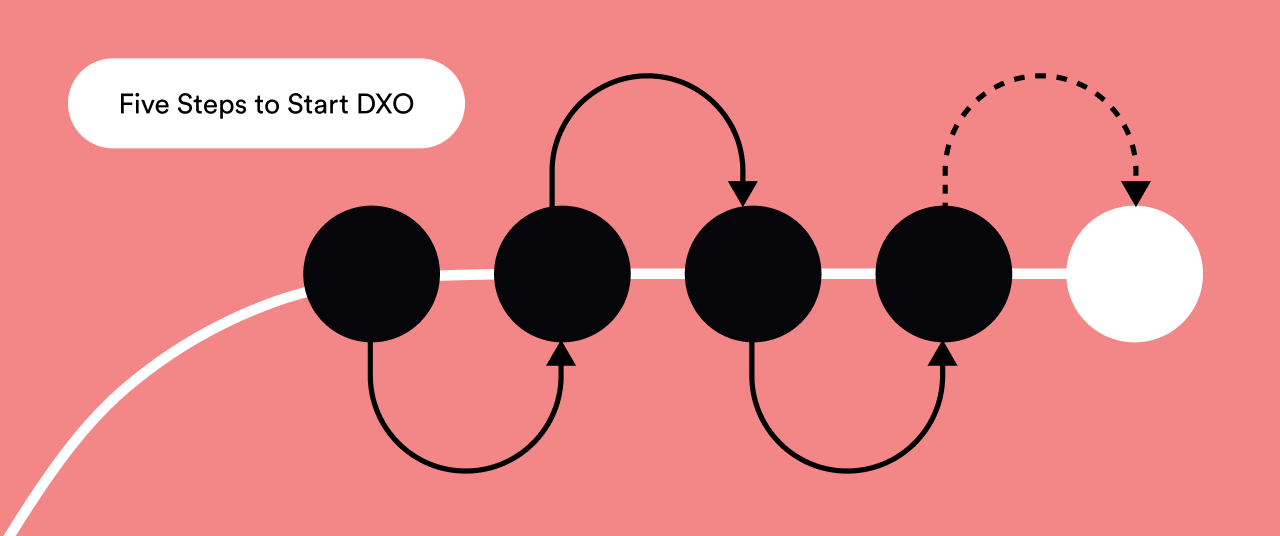
4. The Five Steps to Start DXO in 2026
No complex frameworks. Just a clear starting point.
Small improvements → significant commercial impact.
Step 1 — Get Clarity
A focused audit of journeys, content, messaging, analytics and performance.
Step 2 — Prioritise by Impact
Rank opportunities by commercial value × ease of delivery. This creates a defensible roadmap stakeholders understand.
Step 3 — Fix the Experience
Tighten journeys, navigation, messages, page structure, and content quality. These changes usually produce the fastest ROI.
Step 4 — Strengthen Brand Expression
Visual clarity, component consistency, readability, and emotional cues all influence behaviour.
Step 5 — Improve Technical Performance
Speed, Core Web Vitals, accessibility, SEO/GEO hygiene.
5. Why This Matters to Your 2026 Planning
Digital is under more scrutiny than ever.
Boards want ROI.
Teams want alignment.
Users want simplicity.
DXO sits at the centre of all of that, giving you:
- A clearer roadmap
- A stronger digital foundation
- More value from existing investment
- Measurable commercial impact
- Justification for future growth-driven investment
- A more confident team making evidence-led decisions
It’s one of the highest-ROI, lowest-risk improvements any organisation can make.
Want a personalised view of your opportunity?
We’re offering a free 2-page DXO Opportunity Report, including:
- Your current maturity level
- Your biggest friction points
- Where the biggest commercial uplift lies
- Recommended actions for Q1–Q2
- Estimated ROI potential
Get in touch with us to receive your personalised diagnostic.